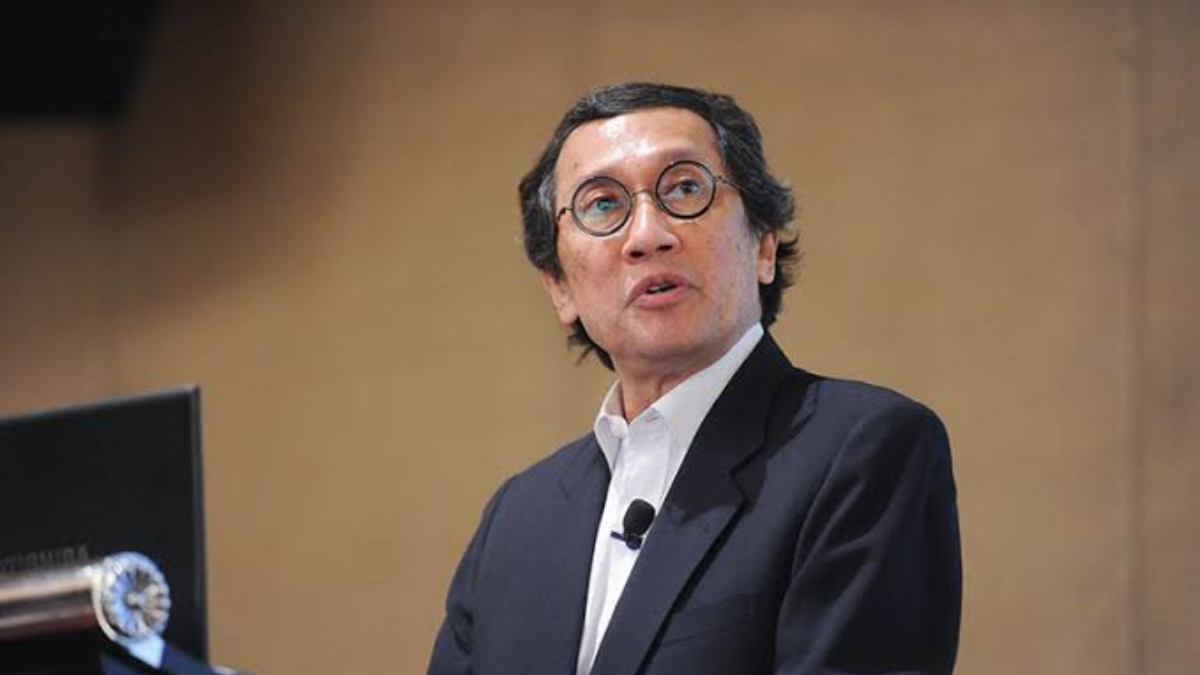


Former Singapore diplomat Bilahari Kausikan delivered a scathing assessment of Pakistan’s political leadership and state institutions, arguing that years of weak governance, economic mismanagement and the unchecked expansion of extremist groups have left the country "teetering on the brink of failure".
Speaking during the National Press Foundation's International Reporting Fellowship, Kausikan dismissed the argument that Pakistan’s geography lay at the heart of its difficulties. Answering a question from a Pakistani journalist, he said the country's long-standing problems stemmed from decades of poor governance rather than its location.
"That's just an excuse. The fact is that Pakistan, from the very beginning, has been mismanaged terribly," he said.
Kausikan criticised both Pakistan’s military establishment and its civilian leadership, saying responsibility for the country's governance crisis could not be placed on any single institution.
"The military is both part of the problem and what holds the country together. Your civilian politicians are a waste of time, all of them, regardless of party," he remarked.
Kausikan served as Singapore's Permanent Secretary for Foreign Affairs from 2010 to 2013 and currently chairs the Middle East Institute at the National University of Singapore.
Recalling the March 1991 hijacking of a Singapore Airlines aircraft by Pakistani militants, Kausikan cited the episode as an example of what he described as Pakistan’s feudal political culture.
He said the hijackers had sought to speak with former Pakistani Prime Minister Benazir Bhutto, who was no longer in office and was staying in Sindh at the time.
Kausikan said that, with assistance from Pakistan’s High Commissioner, he contacted Bhutto’s residence during the early hours of the morning. Despite repeatedly explaining that the hijackers had threatened to begin killing passengers unless they were allowed to speak with Bhutto, he said his request was turned down.
"I explained this to the person three times," Kausikan recalled.
He said the reply he received was: “Madam is sleeping, cannot be disturbed," before the call was abruptly ended.
Singapore’s security forces subsequently stormed the aircraft, killing all four hijackers and rescuing every passenger and crew member without injury.
"We still do not know and we'll never know what they really wanted because they're all dead," he said.
Kausikan said the episode illustrated what he believed to be the deeply feudal character of Pakistani society.
During the discussion, another journalist raised Pakistan’s domestic challenges, including high inflation, increasing fuel prices and a deteriorating law-and-order situation.
Kausikan acknowledged that Pakistan had recently recorded diplomatic successes but maintained that those achievements did not address the country's deeper structural issues.
"Pakistan was very agile and very successful in taking advantage of a diplomatic opportunity. But that doesn't feed the Pakistani people," he said.
He said the country’s core problems remained unresolved.
"Pakistan is a state that is teetering on the brink of failure and has been for some time. It hasn't quite fallen over, for which we should all be grateful, but that diplomatic success doesn't change that fundamental reality," he said.
While recognising the Pakistani military’s diplomatic manoeuvring, Kausikan argued that external accomplishments could not substitute for domestic reform.
"Pakistan's problems are not diplomatic; Pakistan's problems are much more fundamental within Pakistan," he said.
He identified economic mismanagement and the unchecked growth of jihadist groups as the principal drivers of instability.
"Mismanagement of the economy, letting various jihadist movements get out of hand- if you don't fix those problems, you're always going to be teetering on the brink of state failure," he warned.
Kausikan concluded by saying Pakistan’s nuclear arsenal is a key reason the international community continues to closely monitor the country's stability.
"Everybody is worried about it because you happen to have nuclear weapons. If you had no nuclear weapons, nobody would care," he said.